By MS Ingawa
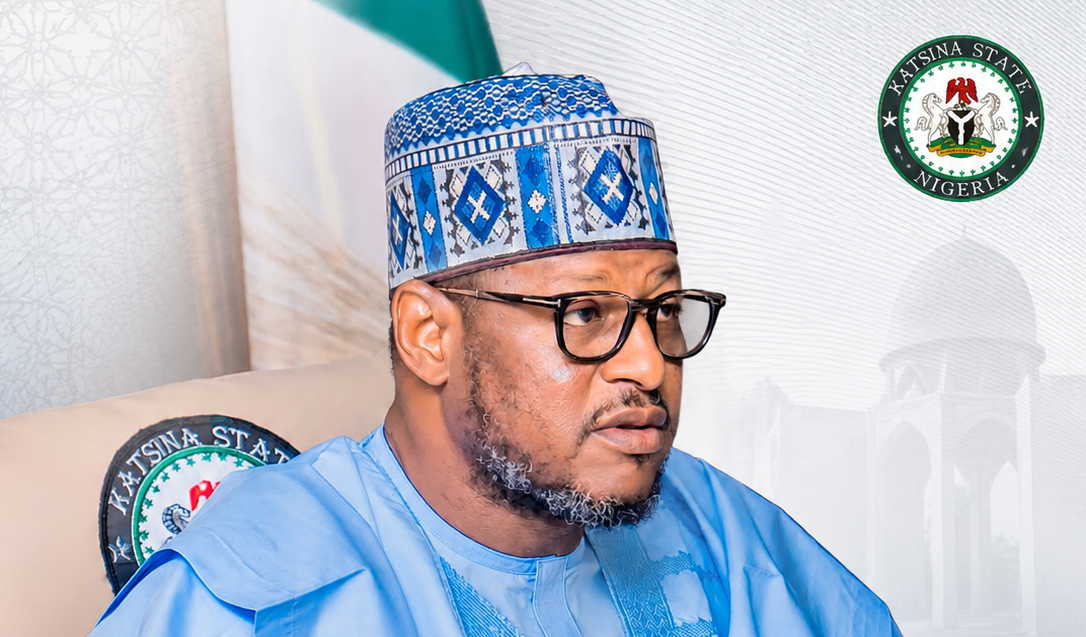
Since assuming office on 29 May 2023, His Excellency, Malam Dikko Umaru Radda, Ph.D., CON, has made infrastructure development one of the most visible pillars of his Building Your Future Agenda.
And for good reason.
Infrastructure is not simply about constructing roads, bridges or public buildings. It is about how people move, how businesses operate, how farmers get their produce to markets, how communities access schools and hospitals, and how easily investors can connect to economic opportunities.
For a State like Katsina, with a large population spread across 34 Local Government Areas and a predominantly agrarian economy, good infrastructure is central to development.
This explains the scale of the infrastructure programme being implemented by the Radda administration. Across three budget cycles, approximately ₦200 billion has been committed to infrastructure development, covering roads, urban renewal, transportation and other public infrastructure across the three senatorial zones.
The Ministry of Works, Housing and Transport, under the leadership of Engr. Sani Magaji Ingawa, has been at the centre of coordinating, supervising and delivering many of these projects.
Expanding the Road Network and Renewing Urban Centres
Perhaps nowhere is the transformation more visible than on the roads.
Across Katsina State, a number of major inter-township, rural and urban roads are either completed, ongoing or under various stages of implementation. Together, these projects represent more than 220 kilometres of major road infrastructure.
Among them are the 5.9km Sokoto Road in Funtua; 3.9km Funtua–Katsina Road; 54.72km Kadanya–Kunduru–Radda–Yana Road; 20.8km Rimaye–Sukuntuni–Karadua Road; 16.6km Kankia–Dangamau–Kusada Road; 18.4km Tashar Into–Baryawa–Tsagem–Muduru Road; and 27.64km Rafin Iwa–Tashar Bawa–Sabua Road.
Other strategic projects include the 14.43km Daura Western Bypass, 4km Filin Polo Road, 3.4km Airport Junction–Eastern Bypass extension, 3.05km Barhim Estate–Eastern Bypass extension, 4.8km Water Board Roundabout–K/Sauri–Central Mosque corridor and the 2.4km CPS–Kofar Kaura Underpass corridor.
The recently awarded Bindawa–Doro–Giremawa–Duwan Road, which cuts across Bindawa and Mani Local Government Areas, is another important addition to the network.
Road construction has also moved into township areas that have often struggled with inadequate internal roads. Bakori, for example, has about 6.6km of township roads, while Malumfashi has 10.7km, alongside several other township interventions across the State.
One project that illustrates the practical impact of this investment is the 3.9km Funtua–Katsina Road and the 1.2km Tsohuwar Kasuwa Road, which together provide 5.1km of improved road infrastructure.
For motorists and residents, the significance is straightforward: better roads mean easier movement, less congestion, improved safety and stronger commercial activity.
Sometimes, the impact of infrastructure is best understood not through figures, but through the everyday experience of the people who use it.
Connecting Rural Communities to Economic Opportunities
In Katsina, road infrastructure is also agricultural infrastructure.
The State is one of Nigeria’s important agricultural belts, and thousands of farmers live and work far from major urban centres. For these communities, the condition of the road connecting a farm to the nearest market can directly affect the value of what they produce.
A farmer may have a good harvest, but if transporting it to market is difficult or expensive, much of that opportunity can be lost.
This is why the administration’s rural road programme is important. By improving connections between farming communities, markets and urban centres, the Government is seeking to make it easier to move agricultural produce and reduce transportation challenges.
The Rural Access and Agricultural Marketing Project (RAAMP) is also supporting this broader strategy.
The Sabon Garin Goje–Majen Gobir road, for instance, has been identified for implementation under RAAMP, while the 19-kilometre Garo–Yar Riga–Randawa road has similarly been captured for reconstruction.
These projects may not attract the same attention as major urban roads, but their economic importance is significant. Better rural connectivity can strengthen agricultural value chains and open new opportunities for communities that are often far removed from the State’s major commercial centres.
Modernising Public Transportation
The infrastructure story in Katsina is not limited to roads.
The Radda administration is also trying to address another everyday challenge: how people move around the cities.
One of the major components of this effort is the introduction of hybrid buses for intra-city mass transit.
The idea is simple: provide safer, more reliable and affordable public transportation while reducing the pressure that transportation costs place on ordinary residents.
Government decisions have provided for the management and operation of 30 hybrid buses through a dedicated Hybrid Bus Operations and Maintenance Unit within the Katsina State Transport Authority (KTSTA).
But putting buses on the road is only one part of the equation.
The operational framework provides for driver recruitment and training, digital fleet monitoring, revenue management, preventive maintenance and stronger operational controls.
Plans also include dedicated transformer substations at facilities in Katsina, Daura and Funtua to support charging and workshop infrastructure.
The buses are expected to operate through designated bus stops and major terminals, with students and other regular commuters receiving particular attention.
The proposed KTSTA Modern Terminus, Phases I and II, is another important part of the plan.
Taken together, these initiatives point towards a more organised public transportation system rather than an approach that focuses only on adding more vehicles to existing roads.
Driving Balanced Urban Development
Katsina’s development cannot be measured only by what happens in the State capital.
One of the notable aspects of the administration’s infrastructure strategy is its focus on the three senatorial zones.
Urban renewal interventions are being pursued beyond Katsina metropolis, reflecting an effort to spread infrastructure development across the State.
This is particularly important as Katsina, Daura and Funtua continue to grow.
The Katsina, Daura and Funtua 2025–2040 Masterplans provide a long-term framework for managing that growth. They cover land use, transportation, housing, commercial development, utilities, green infrastructure and urban design.
In practical terms, the masterplans are an attempt to answer an important question before it becomes a crisis: what should these cities look like as their populations and economies grow?
For years, urban development in many Nigerian cities has often been reactive. Roads are constructed after traffic becomes a problem. Drainage is provided after flooding becomes severe. Residential expansion happens without adequate consideration for transportation and public facilities.
Long-term planning provides an opportunity to do things differently.
The ongoing investments in roads, drainage and land administration are therefore not just about addressing today’s challenges. They are also about preparing Katsina’s cities for tomorrow.
Linking Infrastructure with Climate Action and the Green Economy
Another emerging feature of the administration’s infrastructure agenda is the growing attention to sustainability.
Infrastructure today cannot be planned without considering climate change, energy efficiency and environmental resilience.
In Katsina, this is reflected in investments in renewable energy, sustainable mobility and energy-efficient public infrastructure.
More than 100 kilometres of solar-powered street lighting have been installed along strategic road networks. Beyond improving visibility at night, the lighting supports security and allows commercial activities to continue after dark.
The introduction of hybrid buses and the development of supporting charging infrastructure similarly point towards a gradual shift towards cleaner transportation.
This is an important evolution in the way infrastructure is being approached.
The conversation is no longer simply about asphalt and concrete. It is increasingly about energy efficiency, climate resilience, public safety and sustainable mobility.
Infrastructure Beyond Roads
There is also a tendency to define infrastructure by the number of kilometres of road constructed.
But the work of the Ministry of Works, Housing and Transport goes considerably beyond roads.
Its portfolio includes additional office accommodation for Ministries, Departments and Agencies; access roads and drainage infrastructure; the Malam Dikko Umaru Radda Trade and Investment Centre; additional structures at the Katsina State House in Abuja; Central Store facilities; the Security Consultative Centre; renovation of State properties in Kaduna; rehabilitation of student accommodation; and the upgrading of the Katsina Youth Craft Village (KYCV).
These projects may not always dominate public conversations, but they matter.
Government officials need functional offices to deliver services. Students need decent accommodation. Public institutions need appropriate facilities. Businesses need spaces where they can operate and grow.
Infrastructure, ultimately, is about creating the physical environment within which government and society can function better.
Infrastructure as an Engine of Economic Growth
The real value of infrastructure cannot be measured by the concrete, asphalt or steel that goes into a project.
Its value is measured by what happens after the project is completed.
A good road can reduce travel time and vehicle operating costs. It can make it easier for farmers to reach markets and for businesses to move goods. It can connect communities to schools, hospitals and government services.
It can also make a location more attractive to investors by improving access to markets and production centres.
There is another dimension that is sometimes overlooked: the construction process itself creates economic activity.
Road projects create opportunities for engineers, artisans, technicians, drivers, equipment operators and other workers. They also generate demand for local suppliers, contractors and service providers.
For ordinary communities, the benefits are even more immediate.
A better road can mean a shorter journey to the hospital. A bypass can mean less time spent in traffic. Street lighting can make it safer to return home at night. Better rural access can mean that agricultural produce reaches the market faster.
These are the everyday outcomes that ultimately give infrastructure its meaning.
Strong Focus on Project Delivery
One of the key questions with any large infrastructure programme is not simply how much has been budgeted, but how much has actually been delivered.
According to project status information provided by the Ministry of Works, Housing and Transport, approximately 80% of the listed projects have been completed, with several already commissioned and others awaiting formal commissioning.
This is broadly consistent with the wider project-delivery performance reported by the State Government, which cited an 85.84% completion rate in an assessment of government projects.
Numbers alone, however, do not tell the entire story.
The more important issue is whether budgetary commitments are ultimately translated into projects that people can see, use and benefit from.
That remains the central test of any infrastructure programme.
Building the Foundation for Katsina’s Future
Governor Dikko Umaru Radda’s infrastructure and transportation programme has become one of the defining components of his Building Your Future Agenda.
From major highways and bypasses to township roads and rural access routes; from modern public transportation to solar-powered street lighting; from public facilities to long-term urban planning, the administration is investing in the physical infrastructure needed to connect Katsina more effectively.
The significance of this programme goes beyond the present administration.
Infrastructure, when properly planned and maintained, can serve generations.
A road constructed today can continue to connect communities decades from now. A properly planned city can accommodate future growth. A modern transport system can reduce the cost of movement for thousands of residents. A well-designed public facility can continue to support government services long after the administration that built it has left office.
That is why the infrastructure agenda deserves to be viewed not merely as a collection of individual projects, but as an attempt to reshape the physical and economic landscape of Katsina State.
Under the Ministry of Works, Housing and Transport, led by Engr. Sani Magaji Ingawa, the Government is deploying infrastructure as a tool for economic empowerment, job creation, agricultural development, improved security, social inclusion, investment attraction and sustainable urban growth.
The vision, therefore, goes beyond constructing roads.
It is about connecting people.
It is about opening economic opportunities.
It is about making it easier for farmers to reach markets, businesses to reach customers, children to reach schools and patients to reach hospitals.
And ultimately, it is about laying a durable physical foundation upon which a more prosperous Katsina can be built.
MS Ingawa is the Senior Special Assistant to the Governor on Media & Strategy.
